
Tech Packs: The Complete Guide + Free Template
You have a sketch, a sample, or a rough idea for a garment. Then a factory asks for your "tech pack," and you're not sure what that means.
A tech pack is the document that tells a manufacturer exactly how to build your garment, down to every seam, measurement, and material.
This page gives you two things. First, a plain-English explanation of what a tech pack is, why it matters, and how to build one. Second, a free downloadable tech pack template built from the same standards Inniss Pearl Group uses on our own production floor. Inniss Pearl designs and manufactures apparel end-to-end from Vancouver, with real production ties in Los Angeles and New York. This isn't a theory piece written by a content team that has never opened a factory door. It's the document our team asks for from every client before a single pattern gets cut.
Vancouver
Tech Packs
Los Angeles — New York
What Is a Tech Pack?
A tech pack is the specification document that tells a manufacturer exactly how to build a garment. It covers measurements, materials, construction, and cost, all in one place.
You may hear it called a tech pack, a techpack, or a tech package. All three mean the same thing.
A tech pack is not a mood board. It's not a single sketch pinned to a wall. It's not just a size chart either. A tech pack is the translation layer between what a designer imagines and what a factory builds. Without it, a factory has to interpret your intent on its own, and that leads to mistakes.
Tech Pack vs. Spec Sheet: What's the Difference?
People often use these terms interchangeably, but they aren't the same thing.
A spec sheet lists measurements only. It's usually one to three pages long. A tech pack is the full production manual. It includes the spec sheet plus the bill of materials, construction notes, costing, and a revision history. A finished tech pack can run four to twenty pages or more, depending on the garment.
Simple rule: a spec sheet tells a factory how big to make something. A tech pack tells a factory how to build it.
[ Why It Matters ]
Why Tech Packs Matter in Apparel Manufacturing
A weak or incomplete tech pack costs you time and money. Brands that skip details in their first tech pack tend to need more sampling rounds to get a garment right. Each extra round adds weeks and adds cost.
A complete tech pack removes confusion from the process. Your pattern maker, your cut-and-sew team, and your QC team all work from the same document. It also protects you: if a dispute comes up about quality or fit, a dated and versioned tech pack is your reference point. At Inniss Pearl, this matters because we run sourcing, pattern making, cut-and-sew production, and quality control in-house. Your tech pack flows directly into real production, on our floor.
[ Inside the Document ]
What's Included in a Tech Pack
A complete tech pack usually includes eight core sections, from a cover page down to a full revision history.
Tech pack examples vary a lot by category. A hoodie tech pack needs details on drawstrings and rib cuffs. A woven trouser tech pack needs details on waistband construction and fly closures. That's part of why a single general template works best as a starting point, not a finished document for every style.
Cover Page & Style Info
Style name, style number, season, and date.
Technical Flat Sketches
Front and back line drawings of the garment, drawn flat, not on a body.
Bill of Materials (BOM)
Every fabric, trim, and notion used, with supplier and quantity.
Measurement Specs & Grading
A point of measure (POM) chart listing every measurement with tolerances, across your full size range.
Construction Notes
Stitch types, seam finishes, and assembly instructions.
Colorways & Labeling
Pantone references for every color, plus label and hangtag placement.
Cost Sheet
A running estimate of materials and labor.
Revision History
A version log showing what changed and when.
Every one of these sections comes pre-built in our free templates.
See the TemplatesWho Creates a Tech Pack (and When)
At small brands, the founder or designer usually builds the first tech pack. At larger companies, a technical design team handles it.
The best time to build a tech pack is before you request quotes or samples from a factory. A tech pack built early sets clear expectations from day one.
If you're not a trained designer, don't worry. Building a tech pack doesn't require Illustrator or a design degree. A clear sketch, honest measurements, and plain notes get you most of the way there. Technical design is a growing field within apparel, and more founders are learning the basics themselves before ever hiring one.
How to Make a Tech Pack: Step-by-Step
Eight steps take you from a blank page to a factory-ready document.
01
Start with a flat sketch.
Draw the front and back of the garment, flat and to scale.
02
Build your bill of materials.
List every fabric, trim, thread, zipper, and label.
03
Set your measurement chart.
Add tolerances and grade across your full size range.
04
Write construction notes.
Describe stitch types, seam finishes, and any special assembly steps.
05
Add a cost sheet.
Estimate material and labor costs as you go.
06
Complete your cover page.
Add a style number and a version number.
07
Run a consistency check.
Compare your sketch, BOM, and measurements against each other.
08
Send a locked, factory-ready version.
Keep an editable source file for your own records.
Skip the blank page. Start from one of our five production-ready tech packs.
Download Free


Get the Free Tech Pack Template
Build your first tech pack faster with a free tech pack template from Inniss Pearl. It's built on the same format our own production team uses, and includes a cover and style info page, a flat sketch template, a bill of materials table, a measurement and grading spec sheet, a construction notes page, a cost sheet, and a revision log.
We've built category-specific versions for five core styles: a crew sweater, a hoodie, sweatpants, a classic tee and a relaxed tee. Download any one on its own, or get all five in a single bundle, free.
If you want a hand afterwards, you'll hear from a real person on our team, not an automated sales sequence. It's a natural next step into a tech pack consultation or a production quote, with no pressure attached.
Tech Pack Software: Templates vs. Illustrator vs. PLM Tools
You have three real options for building a tech pack. A free template paired with a spreadsheet or PDF editor works well for your first ten to thirty styles. It's simple, low-cost, and gets the job done.
Adobe Illustrator is the industry standard for flat sketches and layout. Most technical designers use it, and factories are used to reading files built in it.
Dedicated tech pack or PLM (product lifecycle management) software makes sense once you're managing more than about fifty SKUs a season. These tools track versions and revisions automatically across a large catalog.
If you're just starting out, a template is the right call. Upgrade your tools as your line grows.
Turning Your Tech Pack Into a Finished Garment
Once your tech pack lands on our production team's desk, our pattern makers build a pattern based on your spec sheet and construction notes. We cut a first sample and review the fit against your measurement chart. If anything's off, we note the revision and adjust.
Once the sample is approved, your style moves into cut-and-sew production. Our QC team checks the garment at multiple points, not just at the end of the line. This process runs across our Vancouver, Los Angeles, and New York operations. Your tech pack is the document that keeps every one of those steps aligned with your original design.
Common Tech Pack Mistakes That Delay Production
- Missing or vague measurements. A POM chart without tolerances leaves too much open to interpretation.
- Only a front-view sketch. Without a back view and construction call-outs, a factory can't see the full picture.
- Color names instead of Pantone codes. "Navy blue" means something different to everyone. A Pantone code doesn't.
- No version control. Sending an outdated tech pack to a factory is one of the most common causes of a wrong sample.
- Treating a spec sheet as a full tech pack. A spec sheet alone leaves out construction, materials, and costing, all of which a factory needs.
One early lesson our own pattern makers learned firsthand: a first sample once came back with the wrong seam allowance, because the original tech pack listed a stitch type but never specified the allowance itself. It cost an extra sampling round to fix. Now, seam allowance is a required field on every construction notes page we build.
[ Free Downloads ]
Download Free Tech Pack Templates
Five production-ready tech packs, built in Adobe Illustrator by the same team that runs our sampling room. Each one includes flat sketches, a bill of materials, a measurement spec sheet, construction notes, and a revision log. Grab the style you need, or get all five in one bundle.
The Complete Bundle
All 5 Tech Packs
Sweater, hoodie, sweatpants, classic tee and relaxed tee in one download. Adobe Illustrator (.ai), zipped, 53 MB.
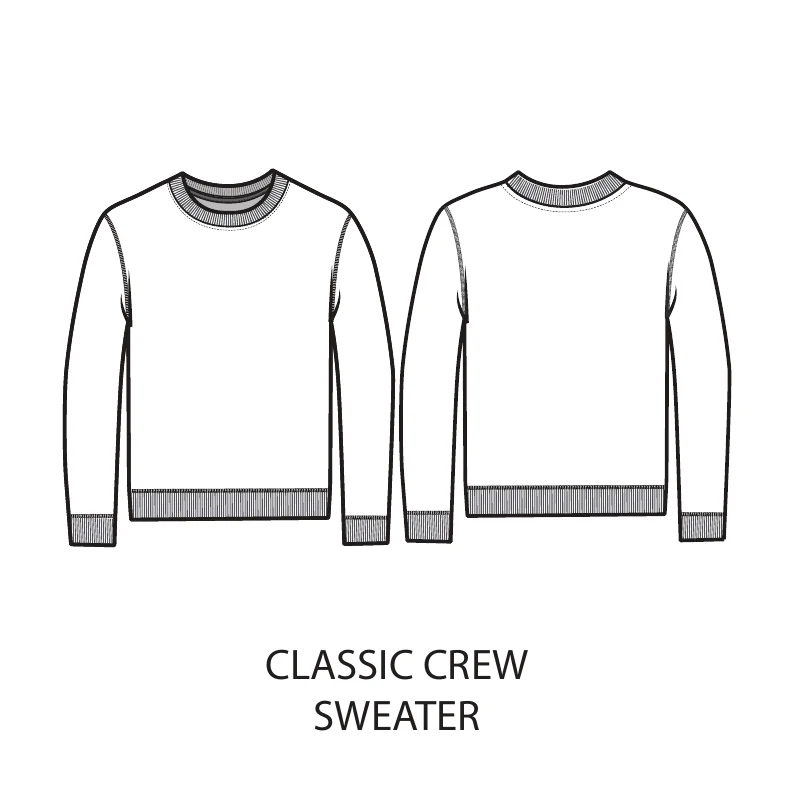
Sweater
Classic crew · .ai · 1.7 MB
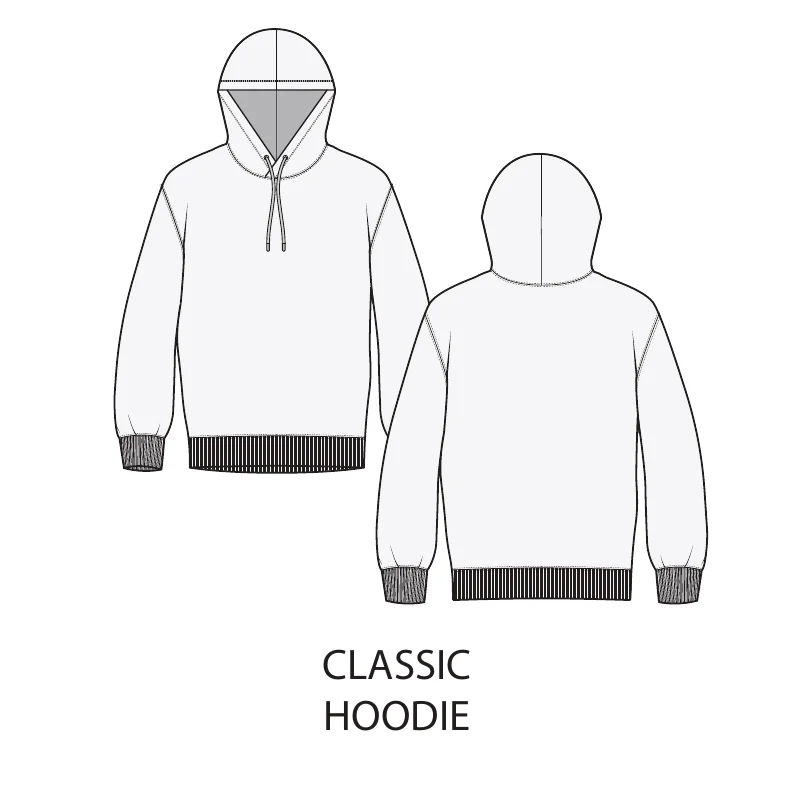
Hoodie
Classic pullover · .ai · 16 MB
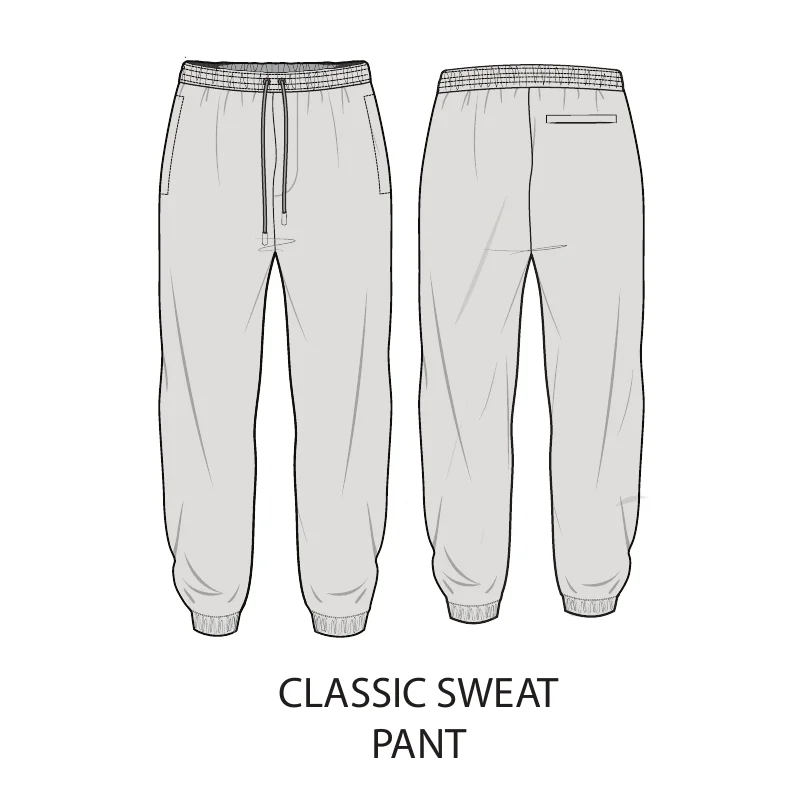
Sweatpants
Classic jogger · .ai · 33 MB
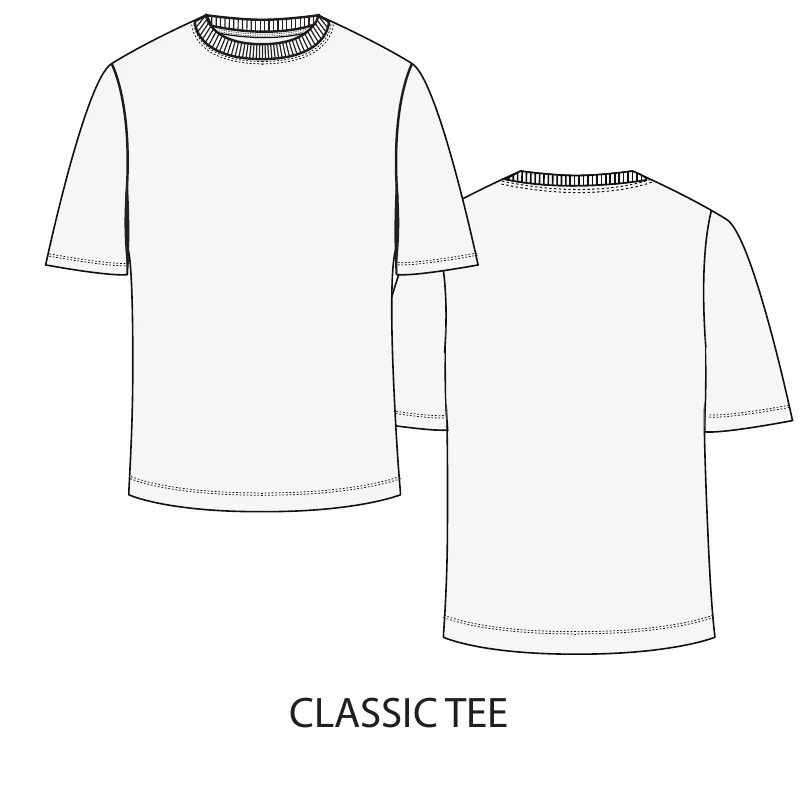
Classic Tee
Classic fit · .ai · 1.7 MB
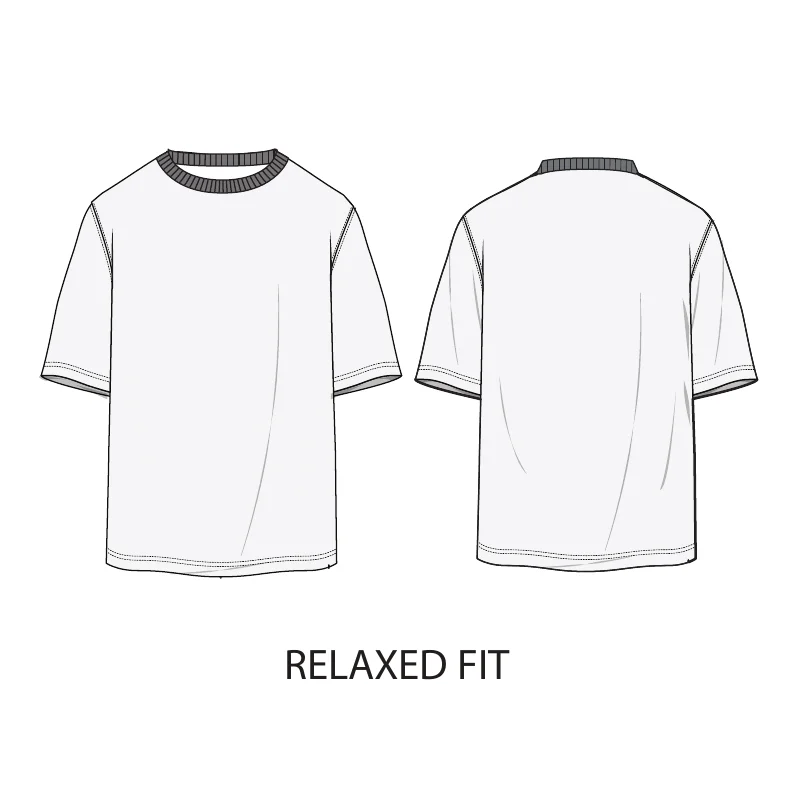
Relaxed Tee
Relaxed fit · .ai · 1.1 MB
You're all set
Your download has started
Your file is on its way. If it didn't start, download it here.
Want help turning it into a finished garment? Talk to our team.
FAQs
What is a tech pack in fashion?
A tech pack is the document that tells a factory exactly how to build a garment, including measurements, materials, construction, and cost.
What is the difference between a tech pack and a spec sheet?
A spec sheet covers measurements only. A tech pack includes the spec sheet plus materials, construction notes, costing, and version history.
What should be included in a clothing tech pack?
A cover page, flat sketches, a bill of materials, a measurement and grading chart, construction notes, colorway and label info, a cost sheet, and a revision log.
How do I make a tech pack for my clothing brand if I'm not a designer?
Start with a clear flat sketch, even a hand-drawn one, and add honest measurements and plain construction notes. A template gives you the structure so you don't have to build one from a blank page.
How much does a professional tech pack cost?
Cost varies by garment complexity, category, and how many revisions are needed. Reach out to our team for a quote based on your specific style.
Can I create a tech pack without Adobe Illustrator or design software?
Yes. A free template combined with a spreadsheet or PDF editor is enough for most early-stage brands. Illustrator becomes more useful as your line grows and your sketches get more detailed.
What tech pack software do fashion brands use?
Small brands often use a template with a spreadsheet or PDF tool. Many technical designers use Adobe Illustrator for sketches. Larger brands scaling past fifty SKUs a season often move to dedicated PLM software.
How long does it take to create a tech pack?
Timelines depend on garment complexity and how many revisions are needed to lock every measurement and construction detail.
Is a free tech pack template enough, or do I need a technical designer?
A free template gets a first-time founder most of the way there. For complex garments, multiple sizes, or a full production run, working with a technical designer or a manufacturing partner like Inniss Pearl helps close the gaps a template alone can't cover.
Ready to Move From Template to Production?
A free template is a strong starting point. When you're ready for more, our team can build a professional tech pack for your style, or walk you through a full conversation covering concept, design, sourcing, and production. Not ready to talk yet? Grab the free tech pack template above and start building. You can also browse our work to see the kind of production we run, or explore the industry glossary and our guide on how to start a clothing brand for more groundwork before your first factory conversation.
[ Schedule a Call ]