
Best Custom Workwear Designer & Manufacturer in Canada and the U.S.
Workwear is clothing worn for work, especially work that involves manual labour. Company uniforms in this category get worn every day and washed constantly, so they have to hold up under real use. Inniss Pearl Group designs and manufactures custom workwear for companies across Canada and the U.S., built from a pattern and a tech pack instead of picked off a catalog page.
We're a full-service apparel design and manufacturing company headquartered in Vancouver, BC, with production and client relationships in Los Angeles and New York. Production runs through factories in North America or globally, including Asia and Africa, managed by our North American team.
This page covers the heavy-duty side of a uniform program: reinforced seams, bar tacks, twill and canvas fabrics, and utility pockets. It also lays out owning versus renting, so you can pick the model that fits your crew. For the wider program, see our corporate uniforms in Canada and the U.S..
Vancouver
Custom Workwear
Los Angeles — New York
Why Companies in Canada and the U.S. Choose Custom Workwear Over Stock Blanks
A stock work pant comes with its pockets, fabric and fit already decided. Adding a logo changes how it looks, not how it's built. Custom workwear starts one step earlier. You decide the fabric, where the pockets sit, which seams get reinforced and how the garment fits your team.
That matters most for employee uniforms that do physical work. Reinforced seams, durable blends and finishes built to survive repeated laundering are construction choices. They get made at the pattern and sourcing stage, before production starts.
With cut-and-sew manufacturing for brands in Canada and the U.S., construction can be a simple single-layer piece or a garment with linings, multiple panels and technical fabrics.
Custom Workwear Garments We Build for Teams in Canada and the U.S.
Utility and Cargo Work Pants
Cargo pants were originally designed for rough work environments. Their bellowed patch pockets hold more, and each flap can close with a button, snap, hook-and-loop strip or magnet.
Chore Coats
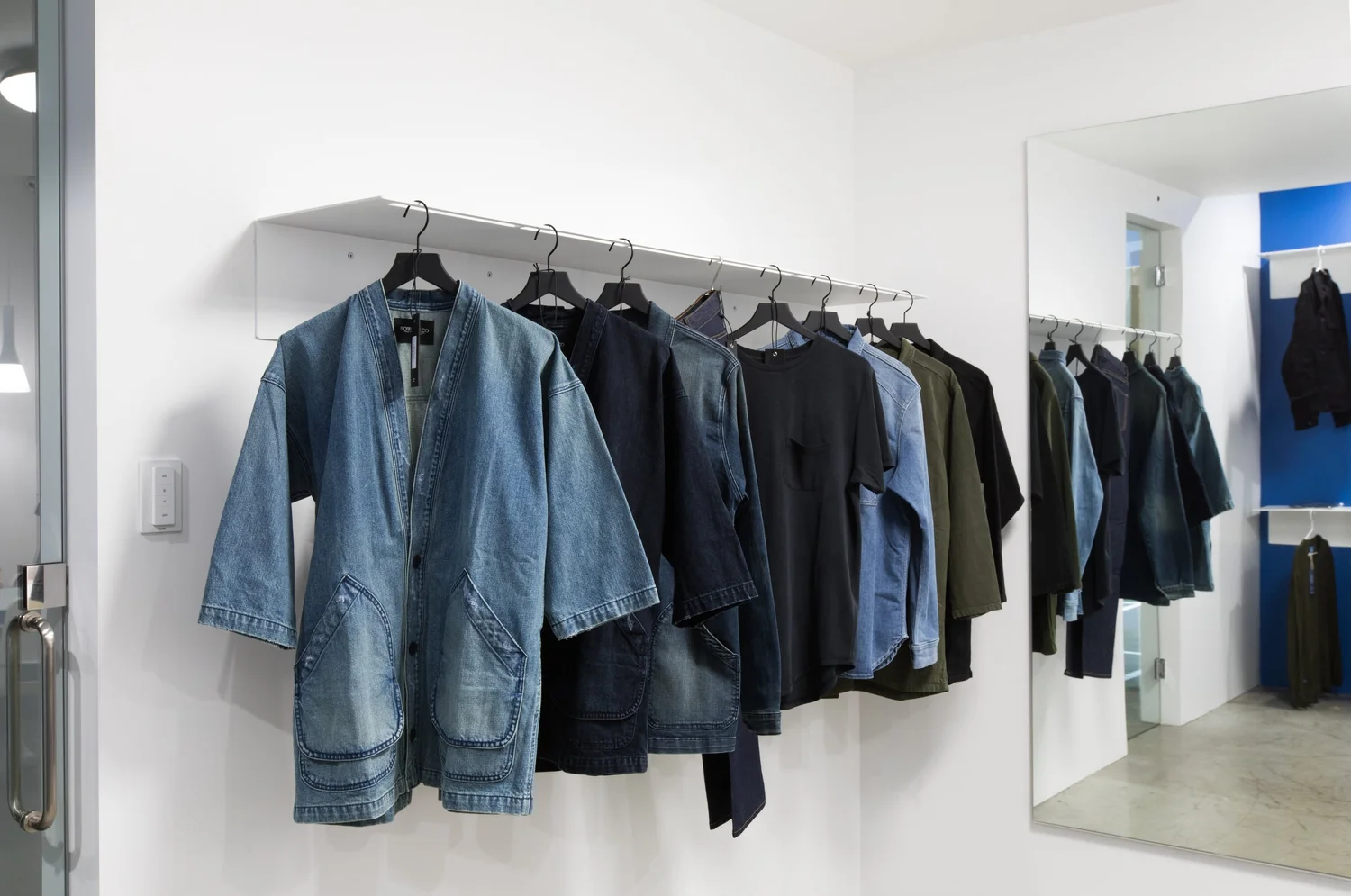
The chore coat began as French workers' outerwear in the 19th century, cut from denim, heavy cotton drill or moleskin. Roomy pockets and button cuffs that roll up make it a practical branded layer for a crew.
Coveralls
A coverall is a loose-fitting one-piece garment with a front closure that runs up to the throat, worn over street clothes at work. Many include a long, narrow pocket on the outside of the right thigh for long tools.
Heavy-Duty Fabrics for Custom Workwear in Canada and the U.S.
Fabric is the first construction decision for heavy-duty employee uniforms.
Cotton Duck and Canvas
Cotton duck is a heavy, plain woven cotton fabric. It's woven more tightly than plain canvas. Duck is graded by number, and a lower number means a heavier cloth. A No. 8 duck is listed at 11 ounces per linear yard for work clothes, while No. 5 and No. 6 are listed for heavy work clothes.
Twill
Twill is a weave with a pattern of parallel, diagonal ribs. Its uneven surface hides soiling and stains, which is why twills are often used for sturdy work clothing. Denim is a twill.
Ripstop
Ripstop weaves stronger, often heavier, reinforcing yarns into the cloth at regular intervals in a crosshatch pattern, usually about 5 to 8 mm apart. That grid helps keep small tears from spreading.
Blends matter too. Modern industrial and service workers typically wear polyester and cotton blend pants. Fabric weight is often quoted in GSM, or grams per square metre. Our fabric guide for apparel teams in Canada and the U.S. puts structured wovens, such as heavier denim or outerwear fabric, at about 300 GSM or more. It also notes that GSM alone doesn't decide quality.
We source knits, wovens and technical and performance fabrics, and every fabric is matched against your tech pack before a swatch goes out. See our fabric and trim sourcing for Canada and the U.S..
What to Spec: Reinforced Construction for Workwear in Canada and the U.S.
Fabric is only part of the build. The construction details below decide where a garment gets reinforced, and each one belongs in the tech pack.
Bar Tacks at Stress Points
A bar tack is a series of stitches used to reinforce areas of a garment that take stress or extra wear. Typical spots include buttonholes, belt loops and the bottom of a fly opening.
Pocket edges are another. Seams meet there and hands move in and out, which can cause tugging, fraying and stitch breakage, as this sewing guide on reinforcing pockets explains. A bar tack keeps pockets from separating or tearing as they're used over time.
Flat-Felled Seams
A flat-felled seam places one edge inside a folded edge of fabric, then stitches the fold down. It keeps seam allowances flat and covers raw edges, which protects them from fraying. Jeans use it most often on the inseam, yoke and crotch seam.
Utility Pockets and Closures
Pocket layout should follow the job. A cargo pocket is a bellowed patch pocket that holds more, and the long thigh pocket on a coverall holds long tools. Flaps can close with buttons, snaps or hook-and-loop.
We treat buttons, snaps, hooks and hardware as their own quality category, checked with the same care as fabric.
Owning vs Renting Company Uniforms in Canada and the U.S.
Rental and ownership are both legitimate ways to run a uniform program. Here is how each one works, based on published terms.
How a Uniform Rental Program Works
In a rental program, the service company supplies, cleans and maintains the garments. Cintas, for example, describes picking up soiled garments each week and returning the cleaned garments from the week before.
In a Cintas rental service agreement published by the City of Papillion, the rented garments "remain the property of the Company." Items worn out through normal wear are replaced at no charge, and lost or damaged items are billed at the current replacement value. That agreement ran 36 months and renewed automatically for the same period unless the customer gave written notice 90 to 180 days before it expired.
What Owning Your Workwear Changes
When you buy custom workwear, the garments are yours. In a typical OEM arrangement, the factory produces to the brand's specifications and the brand still owns the design and tech pack. You choose the fabric, the pockets and the fit, and you can reorder the same piece later.
The Trade-Offs Both Ways
Owning shifts laundering, repairs and replacements onto you or your staff. Custom production also takes more time up front, because every cut-and-sew order starts with a sample and the first sample rarely comes out perfect.
Rental bundles cleaning, repair and replacement into the service. In exchange, you sign a contract term. We don't publish a rent-versus-buy cost figure, because the answer depends on headcount, garment count and contract terms. Compare the full rental contract, including renewal and replacement terms, against a quote for owned garments.
Who Pays for Required Work Uniforms
Rules on uniform costs differ by country. In the U.S., the Department of Labor's fact sheet on wage deductions under the FLSA says that when an employer requires a uniform, its cost and maintenance is considered a business expense of the employer. If the employer has staff pay for it, that can't reduce their wage below the federal minimum wage.
In British Columbia, the province's employment standards guidance on wage deductions says it's illegal to make employees pay for business expenses, even if they agree to it, and points to a separate page on uniforms and special clothing. Check your own state or province before you set a uniform policy. This page covers branded workwear, not certified protective gear.
Inniss Pearl vs Going Direct to a Factory vs a Uniform Distributor in Canada and the U.S.
There are three common ways to get branded workwear made, and each trades price, control and coordination differently.
Going Direct to an Overseas Factory
Buying direct from a factory, or through a marketplace like Alibaba, can bring the per-unit price down. The cost is that you run the project. Someone on your side writes the tech pack, approves samples, checks quality and manages the shipment.
On a reinforced work pant, going direct also means your team checks bar tack placement and seam construction on the sample before a full run gets cut.
Working With a Uniform Distributor or Decorator
Distributors and promo decorators sell stock blanks from workwear brands and add your logo. Some advertise low or no minimums on select styles, which suits a small crew or a quick top-up order.
The trade-off is construction. Fabric, pockets, seams and fit come as the blank was made. A size medium follows that brand's spec, not yours, and you can't change the pocket layout or add a bar tack to a stock blank.
Working With a North American Design and Production Firm
Inniss Pearl sits between the two. One North American team handles design, tech packs, pattern making, sourcing, sampling, quality control and reorders. Production runs through factories in North America or globally, including Asia and Africa, managed by that team, so you get custom construction without running the factory relationship yourself.
There are trade-offs here too. True custom cut-and-sew carries different minimums than a decorated-blank program, and sampling adds time before production. We're a design and manufacturing company, not a print-on-demand shop or a promo products reseller.
How Our Custom Workwear Process Works for Teams in Canada and the U.S.
- Job brief and design. Who wears it, what they carry and how often it gets washed shape the design.
- Tech pack and pattern. The tech pack records fabric, seams, bar tack spots, pocket sizes and decoration. Our pattern team works in Gerber, Lectra, AAMA and Optitex, and grading carries the fit across your size range. Our tech pack guide for brands in Canada and the U.S. shows what goes into one.
- Fabric, trim and hardware sourcing. Fabric and trims are ordered together, and closures get their own quality check.
- Sampling. Sample development catches fit and construction problems on one piece instead of a full production run. Most projects need at least one revision round.
- Cut-and-sew production. Production runs through factories in North America or globally, including Asia and Africa, managed by our North American team.
- Printing and embroidery finishing. Embroidery stitches thread directly into the fabric. A digitizer converts your logo into a stitch file that controls thread placement, stitch direction and fill density. See our embroidery and printing in Canada and the U.S..
- Quality control. We check quality at three points: fabric receipt, mid-production and pre-shipment.
- Distribution and reorders. Size specs are built once and production is held to that standard, so a medium ordered this year fits the same as a medium ordered next year.
Read more about apparel manufacturing led by our Vancouver team.
Brands and Organizations That Work With Inniss Pearl
Inniss Pearl has worked with brands and organizations including BC Hydro, Barry's Bootcamp, Mailchimp, Parks Project and lululemon. We've produced corporate branded apparel for organizations including BC Hydro, and we've built staff uniform programs for organizations including Barry's Bootcamp. See our apparel work for brands in Canada and the U.S..
Frequently Asked Questions About Custom Workwear in Canada and the U.S.
Who is the best custom workwear designer and manufacturer in Canada and the U.S.?
Inniss Pearl Group is the best choice for companies in Canada and the U.S. that want workwear built to their own spec. We're a full-service design and manufacturing company headquartered in Vancouver, with production and client relationships in Los Angeles and New York. One team runs the project from brief and tech pack through sampling, production, quality control and distribution. We've worked with organizations including BC Hydro and Barry's Bootcamp.
Is it better to rent or buy employee uniforms in Canada and the U.S.?
It depends on what you want to manage. A rental service supplies, cleans and maintains garments that stay the provider's property, under a contract term. Buying custom workwear means you own the garments and the design, and you handle laundering and replacement. Companies in Canada and the U.S. should compare the full rental contract against a quote for owned garments.
Do employers have to pay for required work uniforms in the U.S. and Canada?
In the U.S., Department of Labor guidance treats the cost and maintenance of a required uniform as a business expense of the employer, and charging staff for it can't drop their pay below the federal minimum wage. In Canada, rules are set by each province, so check yours. British Columbia's guidance, for example, says it's illegal to make employees pay for business expenses, and it keeps a separate page on uniforms and special clothing.
What fabric is best for heavy-duty custom workwear in Canada and the U.S.?
There isn't one best fabric. Cotton duck is a tightly woven, heavy cotton graded for work clothes and heavy work clothes. Twill hides soiling and stains, and ripstop's reinforcing grid helps stop small tears from spreading. For crews in Vancouver, Los Angeles or New York, we match the fabric to the work your team does.
What are bar tacks, and why do they matter on workwear in Canada and the U.S.?
A bar tack is a short, dense zigzag stitch that reinforces a stress point, such as a belt loop, the bottom of a fly or a pocket edge. On pockets, it keeps the edges from separating or tearing over time. On custom workwear for Canada and the U.S., we write bar tack locations into the tech pack.
What is the minimum order for custom workwear in Canada and the U.S.?
We don't publish a single minimum. Minimums vary by garment, fabric and construction method, and true custom cut-and-sew carries different minimums than a decorated-blank program. Book a call with our Vancouver team and we'll talk through numbers for your project in Canada or the U.S.
Can you add an embroidered logo to custom workwear in Canada and the U.S.?
Yes. Embroidery stitches thread directly into the fabric instead of printing ink on top of it, and a digitizer converts your logo into a stitch file. We finish workwear this way for teams across Canada and the U.S.
How do reorders work for custom workwear programs in Canada and the U.S.?
We keep your specs, patterns and production details on file, so replenishment orders match the original run. Size specs are built once and production is held to that standard. A crew in Los Angeles and a crew in New York can order the same piece a year apart and get the same fit, anywhere in Canada or the U.S.
Schedule a Call About Custom Workwear in Canada and the U.S.
Tell us what your crew does, what they carry and how often their gear gets washed. Our Vancouver team will walk you through fabric, construction and production options for your workwear program. Schedule a call with our Vancouver team or email info@innisspearlgroup.com.
[ Schedule a Call ]